The following booking deposit and cancellation policy applies.
For Departure Dates
12-Dec-2020 , 25-Jan-2020 , 31-Mar-2021 ,
Booking Deposit : 15 % of the Tour amount.
If you cancle the tour the following cancellation policy will apply
Cancellation received
45 days or more - 15 % including deposit
44 days - 33 Days - 25 % including deposit.
For Departure Dates
12-Dec-2020 , 25-Jan-2020 , 31-Mar-2021 ,
Booking Deposit : 15 % of the Tour amount.
If you cancle the tour the following cancellation policy will apply
Cancellation received
45 days or more - 15 % including deposit
44 days - 33 Days - 25 % including deposit.
For Departure Dates
12-Dec-2020 , 25-Jan-2020 , 31-Mar-2021 ,
Booking Deposit : 15 % of the Tour amount.
If you cancle the tour the following cancellation policy will apply
Cancellation received
45 days or more - 15 % including deposit
44 days - 33 Days - 25 % including deposit.
For Departure Dates
12-Dec-2020 , 25-Jan-2020 , 31-Mar-2021 ,
Booking Deposit : 15 % of the Tour amount.
If you cancle the tour the following cancellation policy will apply
Cancellation received
45 days or more - 15 % including deposit
44 days - 33 Days - 25 % including deposit.


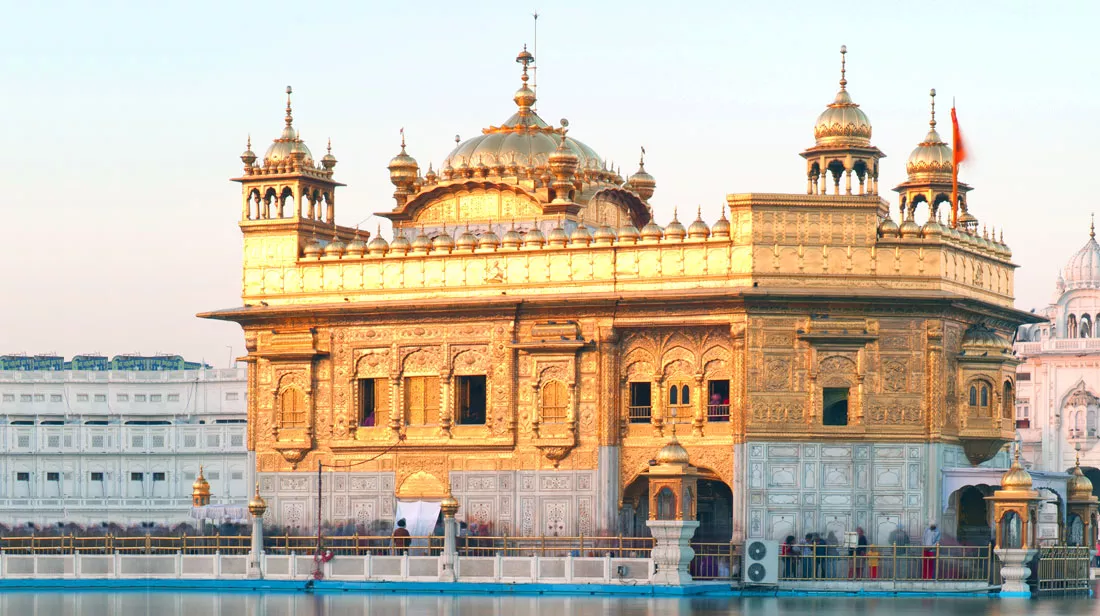 In the morning we visit the holy Sikh site of Sri Harimandir Sahib, the Golden Temple. The holiest text of Sikhism, the Guru Granth Sahib, is inside the gurdwara. The Holy Scripture is brought in a solemn procession from the Akal Takhat (the highest temporal seat of the Sikhs) in the morning to the temple to be returned at night. The temple's construction was intended to build a place of worship for men and women from all walks of life and all religions to come and worship God equally. Next we visit Jallianwala Bagh, the historic site where hundreds of innocent Indian men, women and children were massacred by British General Michael Dyer on April 13, 1919. A memorial and Garden have been created here as a national monument.
In the afternoon we visit Indo-Pak Border to watch retreat ceremony-30 KM on the road to Lahore is India-Pakistan Border. A visit to the border is an interesting experience especially at Sunset, when the retreat ceremony takes place with the Border Security Force on the Indian Side and the Sutlej Rangers on the Pakistan side putting up a well coordinated and spectacular display. The sound from the Bugles blown together from both sides paints past on the canvas when India and Pakistan were one, simultaneously Flags of the two nations are ceremoniously retrieved and lights are switched on marking the end of the day. Amidst thunderous applause today this point is the only land route open to approach Pakistan and central Asia. We return to our Hotel for overnight
In the morning we visit the holy Sikh site of Sri Harimandir Sahib, the Golden Temple. The holiest text of Sikhism, the Guru Granth Sahib, is inside the gurdwara. The Holy Scripture is brought in a solemn procession from the Akal Takhat (the highest temporal seat of the Sikhs) in the morning to the temple to be returned at night. The temple's construction was intended to build a place of worship for men and women from all walks of life and all religions to come and worship God equally. Next we visit Jallianwala Bagh, the historic site where hundreds of innocent Indian men, women and children were massacred by British General Michael Dyer on April 13, 1919. A memorial and Garden have been created here as a national monument.
In the afternoon we visit Indo-Pak Border to watch retreat ceremony-30 KM on the road to Lahore is India-Pakistan Border. A visit to the border is an interesting experience especially at Sunset, when the retreat ceremony takes place with the Border Security Force on the Indian Side and the Sutlej Rangers on the Pakistan side putting up a well coordinated and spectacular display. The sound from the Bugles blown together from both sides paints past on the canvas when India and Pakistan were one, simultaneously Flags of the two nations are ceremoniously retrieved and lights are switched on marking the end of the day. Amidst thunderous applause today this point is the only land route open to approach Pakistan and central Asia. We return to our Hotel for overnight
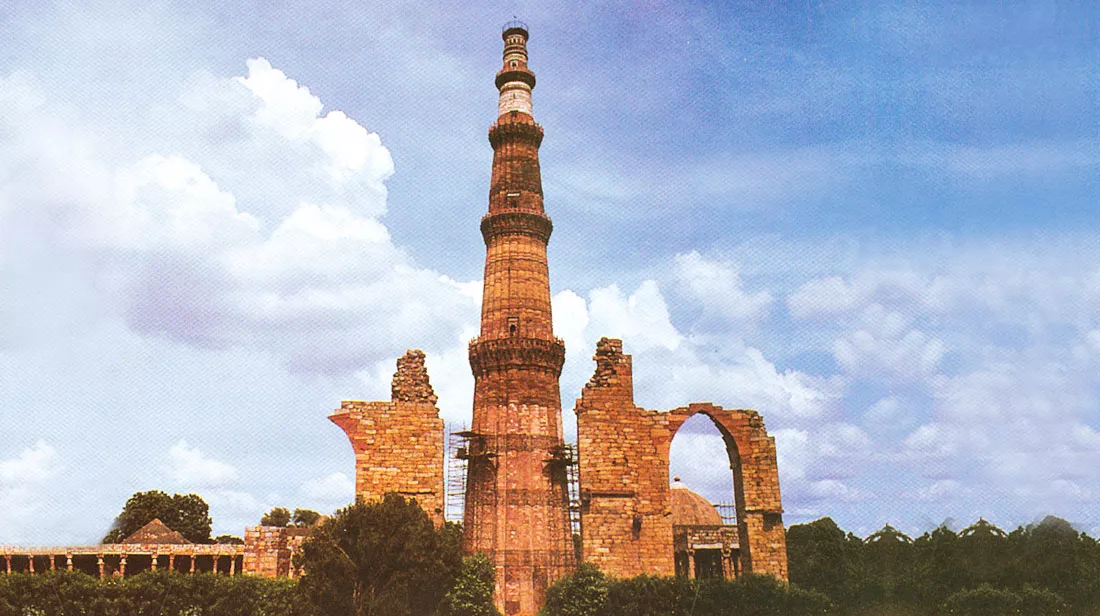 Today we are transferred to Amritsar airport for our flight to Delhi, on arrival in Delhi we are transferred to our Hotel. In the afternoon we start our morning tour with New Delhi and visit Laxmi Narayan Temple- known as Birla Temple, Birla House- the Former Residence of Mahatma Gandhi before he was assassinated by Nathu Ram Godse on January 30, 1948. Later we visit the famous India Gate followed by the Houses of Parliament, Connaught Place and Humayun's Tomb*, the first garden-tomb on the Indian subcontinent, built in 1570. We continue to Qutb Minar and its Monuments* Built in the early 13th century the red sandstone tower of Qutb Minar is 72.5 m high. The surrounding archaeological area contains funerary buildings, notably the magnificent Alai-Darwaza Gate, a masterpiece of Indo-Muslim art and two mosques.
Please Note: Birla House is closed on Monday’s
Today we are transferred to Amritsar airport for our flight to Delhi, on arrival in Delhi we are transferred to our Hotel. In the afternoon we start our morning tour with New Delhi and visit Laxmi Narayan Temple- known as Birla Temple, Birla House- the Former Residence of Mahatma Gandhi before he was assassinated by Nathu Ram Godse on January 30, 1948. Later we visit the famous India Gate followed by the Houses of Parliament, Connaught Place and Humayun's Tomb*, the first garden-tomb on the Indian subcontinent, built in 1570. We continue to Qutb Minar and its Monuments* Built in the early 13th century the red sandstone tower of Qutb Minar is 72.5 m high. The surrounding archaeological area contains funerary buildings, notably the magnificent Alai-Darwaza Gate, a masterpiece of Indo-Muslim art and two mosques.
Please Note: Birla House is closed on Monday’s
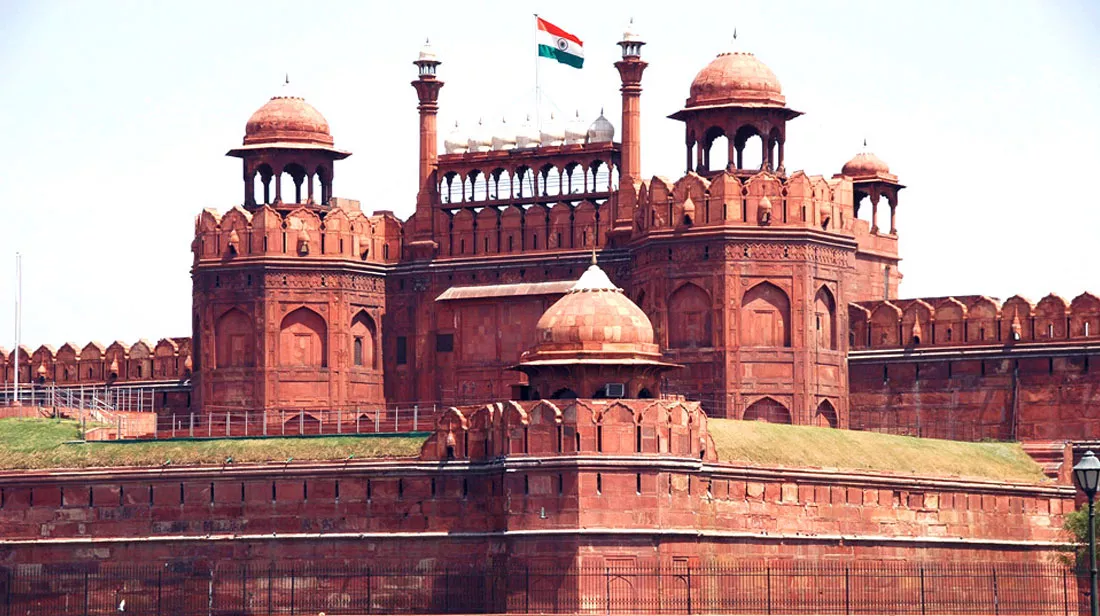 In the morning we concentrates on Old Delhi, starting with the Red Fort Complex*. Named for its massive enclosing walls of red sandstone, it is adjacent to an older fort, the Salimgarh, built by Islam Shah Suri in 1546, with which it forms the Red Fort Complex. The Red Fort is considered to represent the zenith of Mughal creativity which, under the Shah Jahan, was brought to a new level of refinement and each pavilion reveals architectural elements typical of Mughal building, reflecting a fusion of Persian, Timurid and Hindu traditions. After visiting the Red fort, we embark on a captivating journey on a Rickshaw passing through the narrow lanes of the famous Chandni Chowk Bazaar and finally end our rickshaw ride at Jama Masjid, another Mughal majesty and India's largest mosque. After visiting the mosque we visit Raj Ghat, the cremation site of Mahatma Gandhi.
Please Note: Red Fort is closed on Monday’s and Chandni Chowk is closed on Sunday
In the morning we concentrates on Old Delhi, starting with the Red Fort Complex*. Named for its massive enclosing walls of red sandstone, it is adjacent to an older fort, the Salimgarh, built by Islam Shah Suri in 1546, with which it forms the Red Fort Complex. The Red Fort is considered to represent the zenith of Mughal creativity which, under the Shah Jahan, was brought to a new level of refinement and each pavilion reveals architectural elements typical of Mughal building, reflecting a fusion of Persian, Timurid and Hindu traditions. After visiting the Red fort, we embark on a captivating journey on a Rickshaw passing through the narrow lanes of the famous Chandni Chowk Bazaar and finally end our rickshaw ride at Jama Masjid, another Mughal majesty and India's largest mosque. After visiting the mosque we visit Raj Ghat, the cremation site of Mahatma Gandhi.
Please Note: Red Fort is closed on Monday’s and Chandni Chowk is closed on Sunday
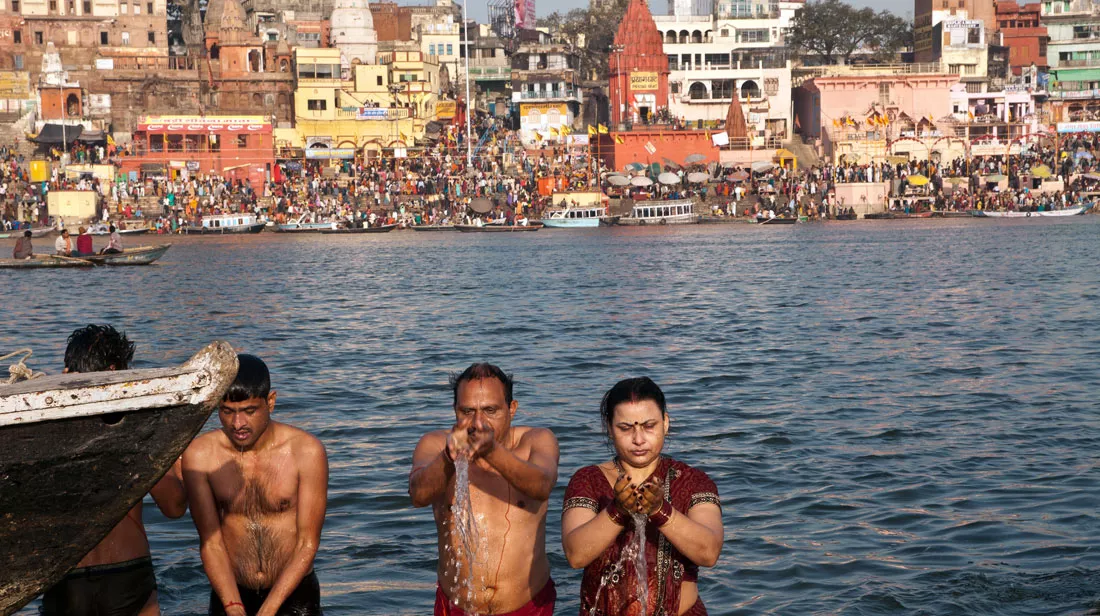 Today we are transferred to airport for our flight to Varanasi. Varanasi is the spiritual centre of Hindus, Buddhists and Muslims alike. This is also the pilgrim centre for the Hindus who come daily to dip themselves in the holy water of the Ganges. On arrival we will continue visit Sarnath the site of Lord Buddha's first sermon after attaining enlightenment. Late afternoon, we start our experience of Varanasi by visiting the Bharat Mata Temple which houses a big relief map of India made from marble. Varanasi is famous for its many temples and we visit the Durga temple, the Tulsi Manas Mandir, the Banaras Hindu University and the Mosque of Mughal Emperor, Aurangzeb. The city is famous also for its Banarasi silk sarees and we visit some of the houses where such silk sarees are still being weaved. Evening is free to enjoy this 5000 years old city and experience sunset at the Ganges. Every evening at sunset, on the banks of the river Ganges, the devotional ceremony of Aarti is performed. Thousands of Hindus and tourists flock to the Ghats, particularly in the pilgrimage town of Varanasi. In the evening we witness the Aarti ceremony on the Ghats of Ganges.
Please Note: Sarnath Museum remains closed on Friday.
Today we are transferred to airport for our flight to Varanasi. Varanasi is the spiritual centre of Hindus, Buddhists and Muslims alike. This is also the pilgrim centre for the Hindus who come daily to dip themselves in the holy water of the Ganges. On arrival we will continue visit Sarnath the site of Lord Buddha's first sermon after attaining enlightenment. Late afternoon, we start our experience of Varanasi by visiting the Bharat Mata Temple which houses a big relief map of India made from marble. Varanasi is famous for its many temples and we visit the Durga temple, the Tulsi Manas Mandir, the Banaras Hindu University and the Mosque of Mughal Emperor, Aurangzeb. The city is famous also for its Banarasi silk sarees and we visit some of the houses where such silk sarees are still being weaved. Evening is free to enjoy this 5000 years old city and experience sunset at the Ganges. Every evening at sunset, on the banks of the river Ganges, the devotional ceremony of Aarti is performed. Thousands of Hindus and tourists flock to the Ghats, particularly in the pilgrimage town of Varanasi. In the evening we witness the Aarti ceremony on the Ghats of Ganges.
Please Note: Sarnath Museum remains closed on Friday.
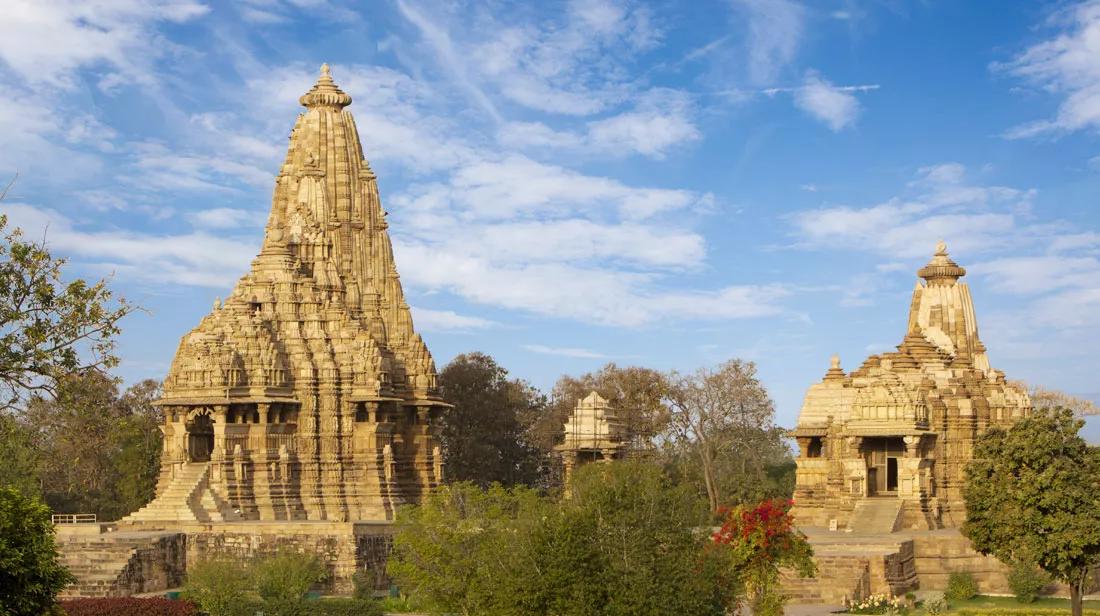
 Early morning a serene experience begins as we take a sunrise cruise on the River Ganges. One of the cardinal principles of Hinduism is the belief in the holiness of the Ganges. Every morning scores of pilgrim and priests fill the riverbanks performing the holy dip and various other rituals. This is a site that has to be seen and experienced as it is so different from anything else what may have seen anywhere in the world. Later we are transferred to airport for our flight to Khajuraho. On arrival we are transferred to our Hotel. Our Khajuraho visit starts with the temples that have been designated a UNESCO World Heritage Site. The temples were built during the apogee of the Chandela dynasty between 950 and 1050 AD. Today only 20 temples remain and they fall into three distinct groups and belong to two different religions - Hinduism and Jainism. These beautiful temples strike a perfect balance between architecture and sculpture. The Kandariya is decorated with a profusion of sculptures that are among the greatest masterpieces of Indian art. The most important ones include the Mahadev Temple, Chitragupta or Bharatji Temple with a lovely image of 11 headed Vishnu, Vishvanath and Nandi Temples, Lakshmana Temple, Visha Temple that was dedicated to Shiva, which is the largest and most typical of temples
 Today we drive to Jhansi en-route visiting Orchha, an amazing medieval fortress-city located on the shores of the Betwa River. After our visit to Orchha we proceed to the Railway Station in Jhansi to embark on the luxury first class train to Agra. This is a very comfortable train journey lasting just over 2 hours with four brief stops en route. It offers air-conditioned "business class airline" seating with meal services on board. We are welcomed in Agra and transferred to our Hotel.
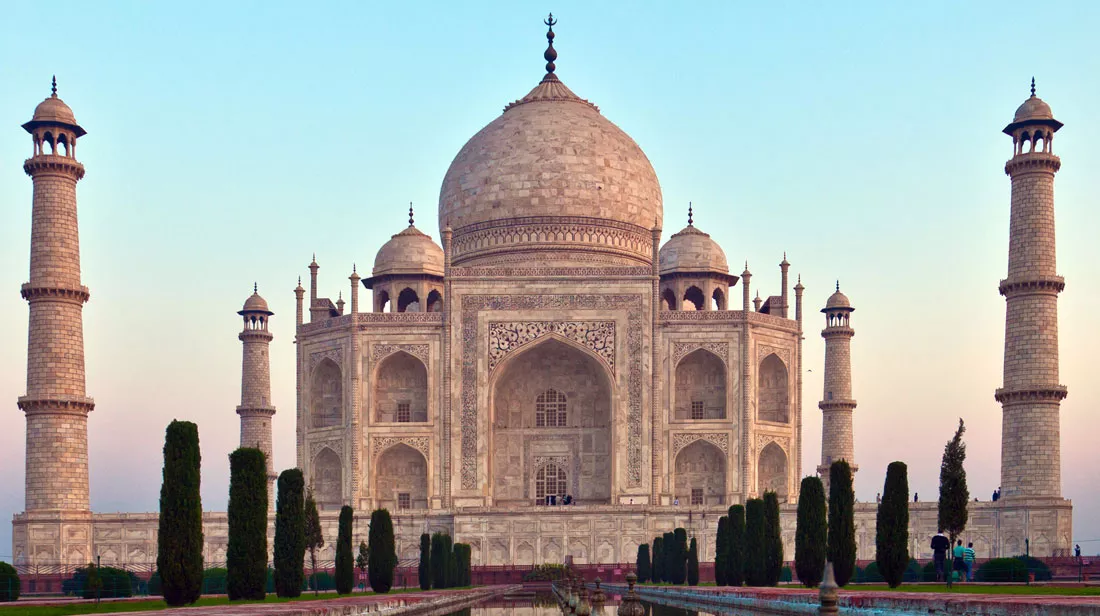 We start our day with a visit to one of the most well-known wonders of the world, the Taj Mahal. Built by Shah Jehan as a mausoleum for his favorite wife, Mumtaz Mahal, the Taj is built of white marble, beautifully carved and inlaid with semi-precious stones. Next, we visit Agra Fort, where Shah Jehan, in the later years of his life, was imprisoned by his son to prevent him from spending the family fortunes on a black echo of the Taj Mahal. We also visit Itmad-Ud-Daulah, often called as Baby Taj. A highly ornate edifice, this mausoleum is considered as the imminent precursor of the Taj Mahal as far as elaborate carvings and inlay work are concerned. Though the structure does not have much to offer architecturally, it makes a clear departure from the earlier Mughal tombs built during the period and is more softer and with a lot of inlay carvings. Later we visit to Sikandra. This is where lie the remains of Akbar the Great - one of the greatest of the Mughal rulers. A very simple mausoleum for a person of his stature. The mausoleum brings in a lot of visitors and black-faced monkeys keen to grab food you may be holding in your hand.
Please Note: Taj Mahal remains closed on Friday’s
We start our day with a visit to one of the most well-known wonders of the world, the Taj Mahal. Built by Shah Jehan as a mausoleum for his favorite wife, Mumtaz Mahal, the Taj is built of white marble, beautifully carved and inlaid with semi-precious stones. Next, we visit Agra Fort, where Shah Jehan, in the later years of his life, was imprisoned by his son to prevent him from spending the family fortunes on a black echo of the Taj Mahal. We also visit Itmad-Ud-Daulah, often called as Baby Taj. A highly ornate edifice, this mausoleum is considered as the imminent precursor of the Taj Mahal as far as elaborate carvings and inlay work are concerned. Though the structure does not have much to offer architecturally, it makes a clear departure from the earlier Mughal tombs built during the period and is more softer and with a lot of inlay carvings. Later we visit to Sikandra. This is where lie the remains of Akbar the Great - one of the greatest of the Mughal rulers. A very simple mausoleum for a person of his stature. The mausoleum brings in a lot of visitors and black-faced monkeys keen to grab food you may be holding in your hand.
Please Note: Taj Mahal remains closed on Friday’s
 A short drive gets us to Fatehpur Sikri, the beautiful capital built in 1640 by the Mughal King, Akbar the Great. The city was later abandoned for lack of water. A superb example of Mughal architecture, it stands perfectly preserved in the desert. We also visit the artistically designed mausoleum of Salim Chisty who is reputed to have prayed for a son for Akbar leading to the birth of Salim Jehangir. From here we continue on a countryside drive to Jaipur. On arrival we check in our Hotel.
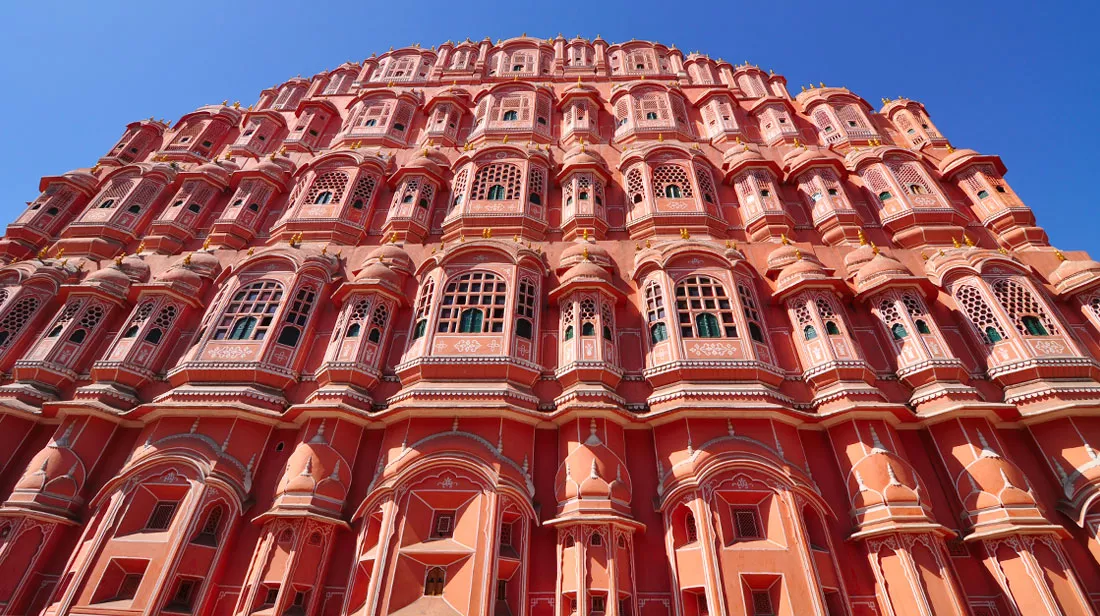 This morning we take a Jeep Ride uphill to the intriguing Amber Palace, a distinguished example of 17th Century Rajput architecture. Located in a valley formed by a range of Aravallis known as Kalikho hills. The Palace and Fort are located on top of the hill with the city on slopes, and the valley protected by fort walls with four gates in the four cardinal directions. The construction of the fort began in 1592. It shows the evolution from the purely defensive fort settlements of the early medieval period to the palace fortress type of architecture typified in the 16th century. This palace fortress was never attacked or invaded. The fort comprises of number of gardens, courtyards and palatial spaces derived from Mughal architecture and are a distinguished example of 17th Century Rajput architecture. We return to Jaipur and experience the art of carpet weaving & block printing. Later we visit the majestic City Palace, which houses a rare collection of Indian art and the beautiful Hawa Mahal, the Palace of Winds, where the ladies of the royal harem used to watch the city from behind the intricately carved facade. We also visit the Jantar Mantar*, an astronomical observation site built in the early 18th century that includes a set of some 20 main fixed instruments designed for the observation of astronomical positions with the naked eye. It is an expression of the astronomical skills and cosmological concepts of the court of a scholarly prince at the end of the Mughal period. The evening is free to enjoy both shopping and the cultural experience in the bazaars. Jaipur is noted for its craftsmen, skilled in brass inlay, lacquer work and stone setting.
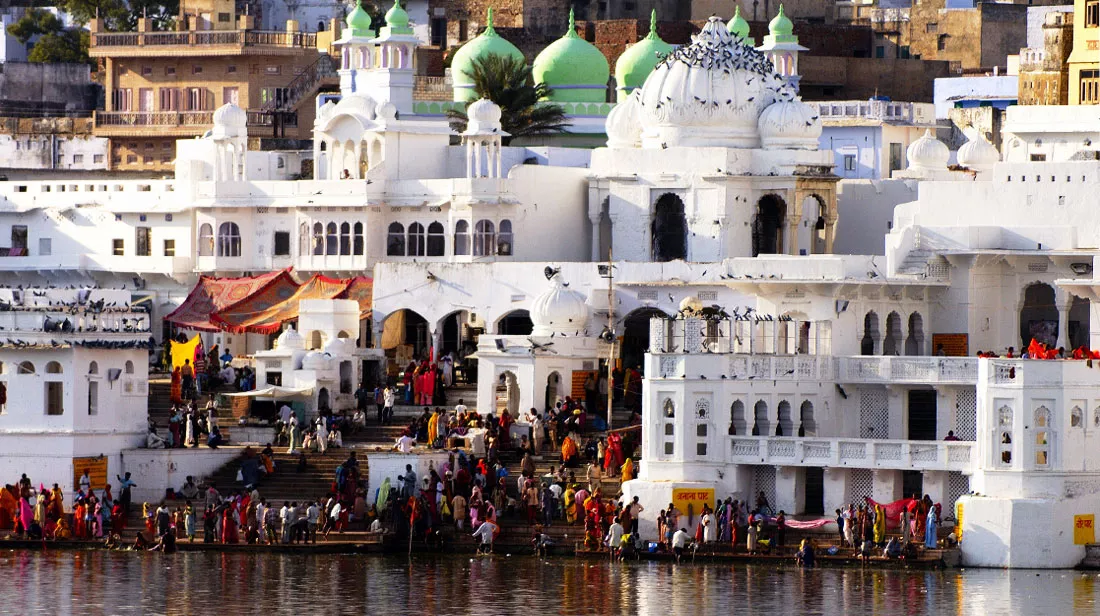 Today we drive to Pushkar, a bewitching little town on the edge of the desert, with temples, bathing Ghats, onion domes and chalk-coloured buildings clustering around its holy lake , which is said to have appeared when Brahma dropped a lotus flower. It's an important pilgrimage centre and we shall see plenty of Sadhus. Pushkar has some temples, though few are as ancient as you might expect at such an important pilgrimage site, since many were destroyed by Aurangzeb and subsequently rebuilt. We visit the famous temple of Lord Brahma Temple, said to be one of the few temples in the world dedicated to this deity. From here we leave for Deogarh. On arrival we check in at Deogarh Mahal, an imposing structure built in the 17th century. It stands atop a hill and offers a commanding view of the Aravalli mountain range and the numerous lakes, strewn across the countryside. With its greying battlements, domes, turrets, jharokhas and huge gateways, it is a picturesque sight from the town below.
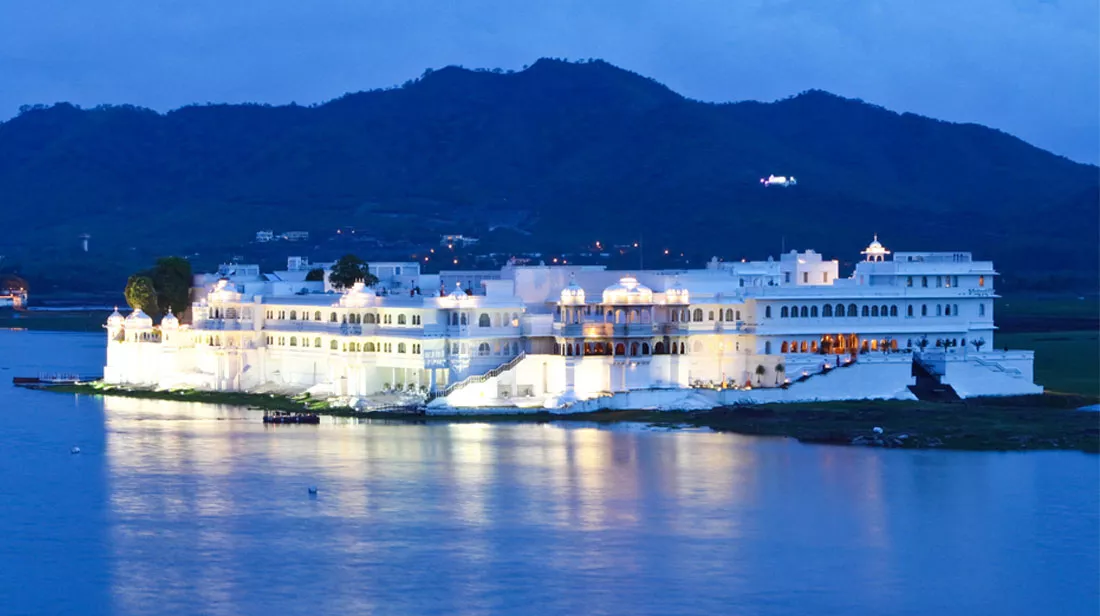 In the morning after breakfast we drive to Udaipur. Upon arrival we check-in our hotel. In the evening we take boat ride at Lake Pichola and visit Jag Mandir, a palace built on an island in 1551. The royal family used the palace as a summer resort and pleasure palace for holding parties.
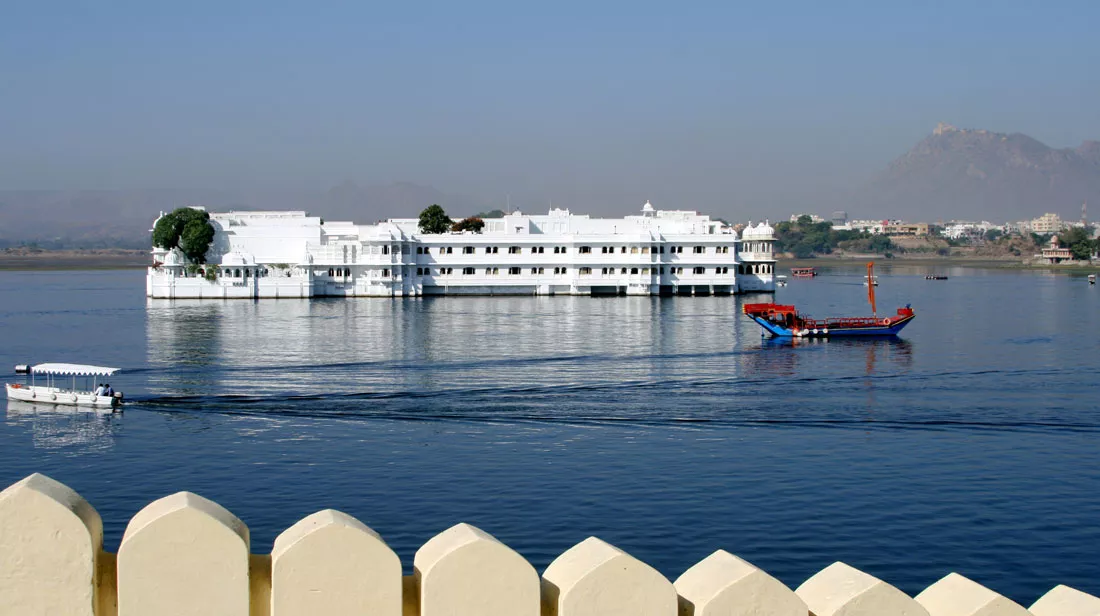 We start our experience of Udaipur by visiting the City Palace. The palace has several architectural and artistic highlights such as the Mor Chowk, known for its stunning peacock mosaics and the Bhim Vilas Palace with its series of lovely wall paintings. From the City Palace we can see the Lake Place, shimmering like a jewel in Lake Pichola. Later we visit the Jagdish Temple, Fateh Sagar Lake and Saheliyon Ki Bari, the Garden of Maids.
In the afternoon we are transferred to airport for our flight to Mumbai. Upon arrival we are transferred to our hotel
We start our experience of Udaipur by visiting the City Palace. The palace has several architectural and artistic highlights such as the Mor Chowk, known for its stunning peacock mosaics and the Bhim Vilas Palace with its series of lovely wall paintings. From the City Palace we can see the Lake Place, shimmering like a jewel in Lake Pichola. Later we visit the Jagdish Temple, Fateh Sagar Lake and Saheliyon Ki Bari, the Garden of Maids.
In the afternoon we are transferred to airport for our flight to Mumbai. Upon arrival we are transferred to our hotel
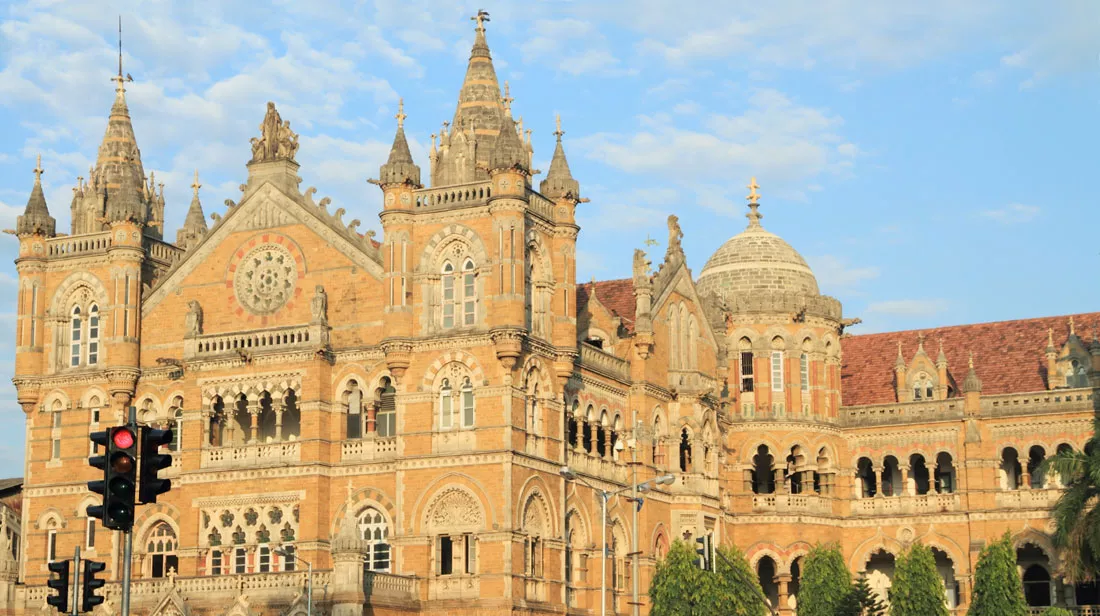 We start our day with a visit to the Gateway of India, Mumbai's most famous monument. Here we embark on our excursion to the Elephanta Caves*, located on an island in the Sea of Oman. The caves contain a collection of rock art linked to the cult of Shiva. Here, Indian art has found one of its most perfect expressions, particularly the huge high reliefs in the main cave. We return to Mumbai by motor launch and visit the Prince of Wales Museum and Chhatrapati Shivaji Terminus*, formerly known as Victoria Terminus Station, an outstanding example of Victorian Gothic Revival Architecture in India, blended with themes deriving from Indian traditional architecture. The building, designed by the British Architect F. W. Stevens, became the symbol of Bombay as the ‘Gothic City’ and the major international mercantile port of India. Its remarkable stone dome, turrets, pointed arches and eccentric ground plan are close to traditional Indian palace architecture. Our Next Stop is at Mani Bhawan, where Mahatma Gandhi stayed here during the Freedom Struggle. The house is now converted into a Museum. From here we leave for Hanging Gardens, the Zoroastrian Towers of Silence, the bustling Crawford Market and drive past Haji Ali, the tomb of a wealthy Muslim merchant. We end our tour at the Dhobi Ghat, the world's largest outdoor laundry. The word Dhobi Ghat is used all over India to refer to any place where many washers are present. In the evening we enjoy farewell dinner at well known restaurant.
Please Note: Elephanta Caves are closed for visitors on Mondays.
We start our day with a visit to the Gateway of India, Mumbai's most famous monument. Here we embark on our excursion to the Elephanta Caves*, located on an island in the Sea of Oman. The caves contain a collection of rock art linked to the cult of Shiva. Here, Indian art has found one of its most perfect expressions, particularly the huge high reliefs in the main cave. We return to Mumbai by motor launch and visit the Prince of Wales Museum and Chhatrapati Shivaji Terminus*, formerly known as Victoria Terminus Station, an outstanding example of Victorian Gothic Revival Architecture in India, blended with themes deriving from Indian traditional architecture. The building, designed by the British Architect F. W. Stevens, became the symbol of Bombay as the ‘Gothic City’ and the major international mercantile port of India. Its remarkable stone dome, turrets, pointed arches and eccentric ground plan are close to traditional Indian palace architecture. Our Next Stop is at Mani Bhawan, where Mahatma Gandhi stayed here during the Freedom Struggle. The house is now converted into a Museum. From here we leave for Hanging Gardens, the Zoroastrian Towers of Silence, the bustling Crawford Market and drive past Haji Ali, the tomb of a wealthy Muslim merchant. We end our tour at the Dhobi Ghat, the world's largest outdoor laundry. The word Dhobi Ghat is used all over India to refer to any place where many washers are present. In the evening we enjoy farewell dinner at well known restaurant.
Please Note: Elephanta Caves are closed for visitors on Mondays.

